
"colonial merchants"
200 article(s) found

Cross-strait coffee gives you 5 minutes to understand the origin of coffee.
There are all kinds of legends about the origin of coffee, but most of them are forgotten because of its absurdity. People will not forget that Africa is the hometown of coffee. Coffee trees are likely to be found in Ethiopia's KAFFA province. Later, batches of slaves were sold from Africa to Yemen and the Arabian Peninsula, and coffee was taken everywhere along the way. That's for sure.

The Development History of Coffee Culture in Japan
Coffee first entered Japan, brought by Dutch missionaries and merchants around 1630, when the Dutch desperately promoted coffee to their Asian colonies of Sri Lanka and Java, India. But the Japanese don't accept this weird drink at all. It was not until the Meiji Restoration that Japanese society began to learn from the West that people gradually accepted the advanced West.

Introduction to the characteristics of Dominica Santo Domingo Coffee Flavor Manor
At the beginning of the 17th century, French, Dutch, and British pirates were operating in the western part of the island of Hispaniola. France began to allow farmers and merchants to gradually colonize the western part of the Spanish island, blocked by the island's mountains. Without attracting the attention of Spaniards in the east, in 1677, about 4,000 French lived in 11 villages in the west of the island. In 1697, France and Spain

Nicaragua Jim Molina Manor honey processing online to buy coffee beans need to pay attention to what?
1. When buying beans online, pay attention to the production date, shelf life, packaging seal, roasting degree of coffee beans, type of coffee beans, and your utensils to determine what beans you want. If you use blue mountain beans to make ESP, it is indeed a more unconventional way, but it is also too unprofessional and expensive, and the taste is not very good. Date of manufacture must be at least

An introduction to the characteristics of the fresh, elegant and full-grained coffee flavor manor in Santo Domingo, Dominica.
At the beginning of the 17th century, when French, Dutch and British pirates were operating in the west of Hispaniola, France began to allow farmers and merchants to gradually colonize the western part of the Spanish island, which was blocked by mountains on the island. It didn't attract the attention of the Spaniards in the east. [3] in 1677, about 4,000 French lived in 11 villages in the west of the island. In 1697, France and

How to drink aged coffee beans from Sumatra
Professional coffee knowledge exchange More coffee bean information Please pay attention to the coffee workshop (Weixin Official Accounts cafe_style) The so-called aged beans are not allowed to be stored for several years at will. If they are not treated in a specific way, the beans will rot after a long time. They will change from fresh turquoise to gray and yellow, completely lose flavor, or even mold and grow worms, which may cause coffee merchants.
When did the cultivation of Dutch coffee start? why are Dutch coffee beans rarely seen now?
For the exchange of professional baristas, please follow the coffee workshop (Wechat official account cafe_style). This time we will introduce the era when large-scale coffee cultivation began in European countries. How did the plantation of this colony begin? Coffee beans handled by European businessmen as coffee began to spread in many parts of Europe, businessmen resold coffee beans bought in Egypt to Europe.

Introduction to the characteristics of the flavor description of Peruvian coffee organic coffee varieties
In 1542, the Spanish royal family set up the Government House in Lima and established the Governor's District of Peru, which became the center of Spanish colonial rule in South America. At that time, Peruvian commerce was prosperous, merchants controlled most of South America's import and export trade, and the precious metals and other goods looted by the Spaniards from South America were shipped out of Peru. The colonists encroached on land in Peru, forced the Mita system, and forced the Indians to

Peruvian Coffee Flavor description characteristics of Grinding degree introduction of Fine Coffee beans in producing areas
In 1542, the Spanish royal family set up the Government House in Lima and established the Governor's District of Peru, which became the center of Spanish colonial rule in South America. At that time, Peruvian commerce was prosperous, merchants controlled most of South America's import and export trade, and the precious metals and other goods looted by the Spaniards from South America were shipped out of Peru. The colonists encroached on land in Peru, forced the Mita system, and forced the Indians to

Introduction to the price of manor flavor description treatment method in Peruvian coffee production area
In 1542, the Spanish royal family set up the Government House in Lima and established the Governor's District of Peru, which became the center of Spanish colonial rule in South America. At that time, Peruvian commerce was prosperous, merchants controlled most of South America's import and export trade, and the precious metals and other goods looted by the Spaniards from South America were shipped out of Peru. The colonists encroached on land in Peru, forced the Mita system, and forced the Indians to
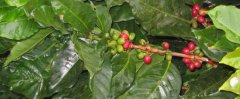
The Spread of Coffee/ Coffee spread
The spread of coffee to Asia The Arabians could not spread coffee in Asia but the Dutch did! In the process of Dutch colonization, they grew coffee in Maraba, Indiaand brought coffee to Batavia in Java, Indonesia in 1699. The Dutch colonie
The Spread of Coffee/ Coffee spread
The spread of coffee to Asia The Arabians could not spread coffee in Asia but the Dutch did! In the process of Dutch colonization, they grew coffee in Maraba, Indiaand brought coffee to Batavia in Java, Indonesia in 1699. The Dutch colonie

The taste of Peruvian coffee is smooth and smooth. Introduction to the characteristics of fine coffee beans and organic coffee in manor area.
In 1542, the Spanish royal family set up the Government House in Lima and established the Governor's District of Peru, which became the center of Spanish colonial rule in South America. At that time, Peruvian commerce was prosperous, merchants controlled most of South America's import and export trade, and the precious metals and other goods looted by the Spaniards from South America were shipped out of Peru. The colonists encroached on land in Peru, forced the Mita system, and forced the Indians to

Introduction to the description and treatment of taste and flavor in the producing area of Peruvian coffee
In 1542, the Spanish royal family set up the Government House in Lima and established the Governor's District of Peru, which became the center of Spanish colonial rule in South America. At that time, Peruvian commerce was prosperous, merchants controlled most of South America's import and export trade, and the precious metals and other goods looted by the Spaniards from South America were shipped out of Peru. The colonists encroached on land in Peru, forced the Mita system, and forced the Indians to

Taste characteristics of Peruvian coffee with smooth taste introduction of fine coffee beans and organic coffee
In 1542, the Spanish royal family set up the Government House in Lima and established the Governor's District of Peru, which became the center of Spanish colonial rule in South America. At that time, Peruvian commerce was prosperous, merchants controlled most of South America's import and export trade, and the precious metals and other goods looted by the Spaniards from South America were shipped out of Peru. The colonists encroached on land in Peru, forced the Mita system, and forced the Indians to
An introduction to the taste and flavor of Uganda boutique coffee bean manor.
In the 1870s, British colonists attempted to annex all parts of Uganda, which was thwarted by the Kingdom of Buniolo. At the end of the 1970s, the Anglo-French Christian Church went to the Kingdom of Buganda to preach. They interfered in politics and caused sectarian strife. After years of war, the kingdom of Buganda declined rapidly. In 1890, British troops invaded Buganda. Frederick Frederick Lugard, agent of the Royal British East Africa Company.

What is the definition of scaa boutique coffee concept? What is the best variety of boutique coffee?
Professional coffee knowledge exchange more coffee bean information Please follow Coffee Workshop (Wechat official account cafe_style) Coffee originated in Ethiopia and was originally grown in a few countries in Africa and the Middle East. It was rapidly spread to the whole world in the 18th century, which was directly related to the rise of European powers and the invasion and occupation of colonies. In 1982, SCAA (American essence)

The taste of Peruvian coffee is smooth and smooth. Introduction to the characteristics of fine coffee beans in the manor area.
In 1542, the Spanish royal family set up the Government House in Lima and established the Governor's District of Peru, which became the center of Spanish colonial rule in South America. At that time, Peruvian commerce was prosperous, merchants controlled most of South America's import and export trade, and the precious metals and other goods looted by the Spaniards from South America were shipped out of Peru. The colonists encroached on land in Peru, forced the Mita system, and forced the Indians to

Introduction of Peruvian Coffee Variety characteristics of Fine Coffee Bean Flavor Manor
In 1542, the Spanish royal family set up the Government House in Lima and established the Governor's District of Peru, which became the center of Spanish colonial rule in South America. At that time, Peruvian commerce was prosperous, merchants controlled most of South America's import and export trade, and the precious metals and other goods looted by the Spaniards from South America were shipped out of Peru. The colonists encroached on land in Peru, forced the Mita system, and forced the Indians to

The Origin Culture of Coffee-the Story of the Shepherd
Although coffee was found in the Middle East, coffee trees first originated in Africa, a region now belonging to Ethiopia, called Kaffa, from which coffee spread to Yemen, Arabian Peninsula and Egypt, where coffee developed rapidly and soon became popular in people's daily lives. By the 16th century, early merchants had sold coffee in Europe, thus using coffee as a